
Learn how e-commerce businesses can use automated, personalized WhatsApp abandoned cart recovery journeys to reconnect with shoppers and encourage completed purchases.
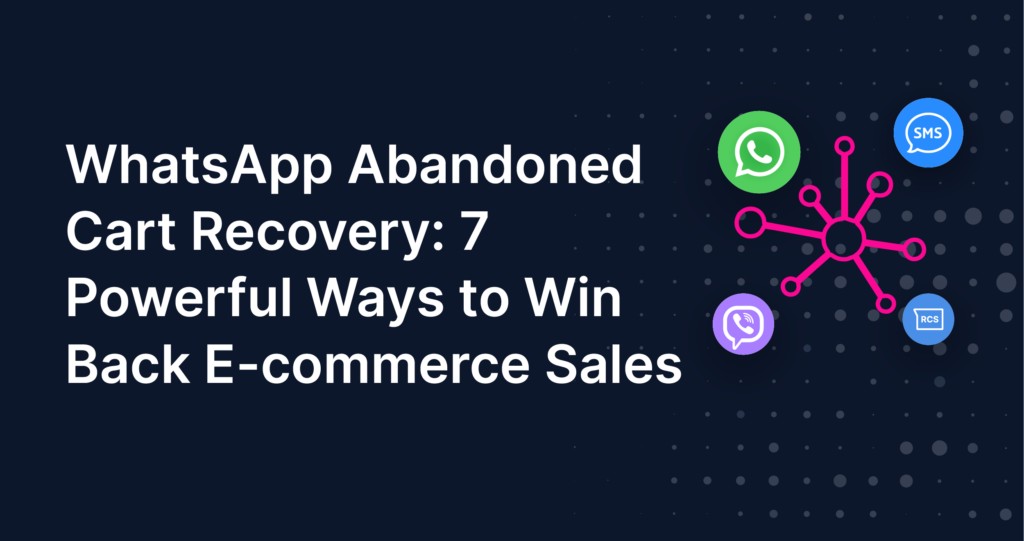
WhatsApp Abandoned Cart Recovery: 7 Powerful Ways to Win Sales
Discover how WhatsApp abandoned cart recovery can help e-commerce businesses reconnect with shoppers using automated reminders, personalization, support, and smarter customer journeys.
Turn Abandoned Carts Into New Opportunities
A shopper finds a product they like.
They add it to their cart.
They may even reach the final stages of checkout.
Then they disappear.
For an e-commerce business, that unfinished journey can feel frustrating. Yet an abandoned cart isn’t necessarily a lost customer. In many cases, it represents something far more useful: clear purchase intent that hasn’t yet turned into a completed transaction.
The shopper has already discovered the business, explored its products, and taken an important step toward buying.
They may simply need a reason—or an easier way—to return.
That’s where WhatsApp abandoned cart recovery can help.
Instead of allowing an unfinished cart to become the end of the conversation, businesses can automatically reconnect with shoppers using personalized WhatsApp reminders and convenient links that guide them back toward checkout.
Javna enables e-commerce businesses to automate abandoned-cart reminders through WhatsApp, including personalized product links designed to help customers return and complete their purchases. Its e-commerce capabilities also connect customer communication with store events, allowing cart recovery to become part of a broader automated customer journey.
But successful cart recovery isn’t about sending as many reminders as possible.
It is about sending the right message, at the right moment, with a clear next step.
WhatsApp Abandoned Cart Recovery
WhatsApp abandoned cart recovery is the process of reconnecting with a shopper who added products to an online cart but didn’t complete the purchase.
A typical journey looks something like this:
Customer adds products → Customer leaves → Cart remains incomplete → Recovery workflow begins → Customer receives a relevant reminder → Customer returns to checkout
Automation makes this possible at scale.
Rather than asking marketing teams to manually identify unfinished carts and contact each shopper, the business can connect cart activity with a customer-engagement workflow.
Javna’s e-commerce solutions support automated abandoned-cart recovery across WhatsApp, while its store-connected workflows can respond directly to e-commerce events.
This matters because an abandoned cart is different from a cold marketing lead.
The shopper has already taken action.
They’ve shown interest in specific products and moved deeper into the buying process.
The recovery message can therefore be based on genuine context.
Instead of saying:
“Take a look at our products.”
The conversation can effectively say:
“You were already considering these products. Would you like to continue?”
That difference makes abandoned-cart engagement more relevant than a generic promotional message.
Why Do Customers Abandon Their Shopping Carts?
Not every abandoned cart means the customer rejected the product.
Online shoppers leave for many reasons.
They might get distracted.
They might decide to complete the purchase later.
They may want to compare prices or products first.
They could encounter unexpected costs near checkout.
They may have a question about shipping, payment, delivery, sizing, availability, or another detail.
Sometimes the checkout process simply asks for more effort than the shopper is willing to give at that moment.
This is why businesses should avoid treating every abandoned cart as the same problem.
Some shoppers need a reminder.
Others need information.
Some need support.
And some have genuinely decided not to continue.
A good recovery strategy recognizes these differences.
The purpose of communication isn’t to pressure every customer into buying. It is to remove unnecessary barriers for people who may still be interested.
That customer-first mindset is essential.
An aggressive recovery message may create short-term attention but damage the broader customer relationship.
A helpful message, on the other hand, can remind the shopper what they were considering and provide a simple route back.
Why Use WhatsApp for Abandoned Cart Recovery?
Cart recovery has traditionally been associated with email.
Email can still play a role in customer engagement, but shoppers increasingly interact with businesses through messaging channels as well.
WhatsApp introduces a conversational element into recovery.
Instead of sending a reminder into an inbox and ending the interaction there, businesses can create an opportunity for the customer to respond.
That distinction matters.
Imagine a shopper abandoned a cart because they weren’t sure whether a particular product was right for them.
A reminder alone may not solve the problem.
But if the message allows the customer to return and ask a question, the recovery journey can become a conversation.
Javna’s WhatsApp Business Platform supports abandoned-cart reminders alongside personalized offers, product recommendations, order communications, interactive messaging, and customer support use cases.
WhatsApp can therefore support both parts of recovery:
The reminder that brings the customer back
and
The conversation that helps remove the remaining obstacle.
This makes cart recovery part of a larger conversational-commerce strategy rather than an isolated campaign.
How WhatsApp Abandoned Cart Recovery Works
A well-designed recovery flow connects several steps.
The exact implementation varies depending on the e-commerce environment, but the core logic is straightforward.
First, the business identifies that a customer has left a cart unfinished.
Then an automated workflow decides whether and when a reminder should be sent.
Relevant customer or cart information can personalize that message.
The customer receives the reminder through WhatsApp.
They can then return toward checkout or continue the conversation if they need help.
Detect the Abandoned Cart
Automation begins with an event.
The business needs a way to know that a shopper created or updated a cart without completing the purchase.
Once the relevant store event is available to the engagement workflow, the business can apply its cart-recovery rules.
Javna’s e-commerce integrations support workflows triggered by store activity and specifically include abandoned-cart reminders and recovery journeys.
This event-driven approach is important because recovery messages should reflect real customer behavior.
The shopper shouldn’t receive a cart reminder when there is no cart to recover.
And if the customer completes the purchase, the communication should move into the appropriate order journey instead.
Automation works best when messaging follows the customer’s actual situation.
Send a Timely Personalized Reminder
The next decision is timing. Sending immediately may be unnecessary. The customer might simply be moving between screens or planning to return shortly. Waiting too long can create a different problem: purchase intent may become weaker. There isn’t one universal delay that works for every store.
Businesses should test timing based on their products, customer behavior, average purchase cycle, and campaign results. What matters is that the workflow allows the business to send the reminder at a meaningful point rather than randomly.
Javna’s e-commerce offering supports automatically sending personalized reminders to shoppers who leave products behind, while campaign monitoring can help businesses evaluate results. Personalization matters here as much as timing. A customer is more likely to understand a message that relates directly to their unfinished journey than one that looks like a generic promotion.
Make It Easy to Return to Checkout
Every additional step creates friction.
Suppose a shopper receives a reminder but then has to open the website, search for the store, locate the product again, rebuild the cart, and find checkout.
The recovery experience hasn’t really recovered anything.
A stronger journey makes returning simple.
Javna’s marketing capabilities specifically support abandoned-cart reminders with personalized product links that bring customers back toward completing checkout.
This is an important design principle for every cart-recovery campaign:
Don’t simply remind people that they abandoned something. Help them continue where they stopped.
The message and next action should work together.
Continue the Conversation When Customers Reply
Not every shopper who receives a reminder will immediately complete checkout.
Some will have questions.
Perhaps they want to know more about the product.
Maybe they need help with delivery information.
Perhaps something prevented them from completing the purchase.
That’s where conversational commerce becomes especially useful.
Javna’s e-commerce offering includes AI-powered chatbot functionality and automated customer support alongside cart recovery.
Routine questions can be handled through automated conversations where appropriate.
When the situation requires more attention, customer-service processes can continue the interaction.
The goal is not just to recover the cart.
It is to understand why the customer stopped and make the next step easier.
7 Ways to Improve WhatsApp Cart Recovery
A basic reminder is easy to create.
A strong recovery strategy requires more thought.
Here are seven ways businesses can build better WhatsApp abandoned-cart journeys.
Personalize Every Reminder
Personalization should begin with context.
The customer already interacted with the business, so the recovery message should reflect that experience.
Depending on the available information and configured workflow, this may include the customer’s name, relevant products, or a personalized link that returns them toward their cart.
Javna supports personalized WhatsApp cart reminders and product links as part of its marketing and e-commerce capabilities.
But personalization shouldn’t become clutter.
A recovery message does not need to repeat everything the business knows about the customer.
The best personalization makes the message clearer.
The customer should immediately understand:
Why am I receiving this?
What was I interested in?
What should I do next?
If those answers are obvious, personalization is doing its job.
Find the Right Timing
Timing can change how a message feels.
A reminder that arrives too quickly may feel unnecessary.
One that appears long after the customer has forgotten the purchase may have little impact.
Businesses should therefore treat timing as something to optimize rather than assume.
Start with a reasonable recovery window based on the normal buying journey.
Then monitor results.
Different products may require different decisions.
An everyday low-consideration product may have a relatively short purchase cycle.
A higher-value purchase may involve more research and comparison.
The best cart-recovery strategy reflects how customers actually shop.
Write for Action, Not Pressure
Urgency can be useful when it is genuine.
Pressure is different.
Messages designed around exaggerated scarcity or constant discounting can damage trust.
Recovery copy should primarily make it easy for the customer to understand and continue.
A good message can be concise:
You left something behind.
Your products are still worth another look.
Here’s a convenient way to return.
Need help? Continue the conversation.
That approach respects the customer’s decision while keeping the path open.
Javna’s e-commerce tools support approved WhatsApp templates for automated customer engagement, enabling businesses to create structured recovery communication at scale.
Use More Than One Recovery Touchpoint Carefully
One reminder may be enough for some customers.
Other recovery journeys may benefit from an additional follow-up.
The important word is carefully.
A sequence shouldn’t become repeated pressure.
Each message should have a reason to exist.
For example, the first reminder might simply make returning easy.
A later communication might present a relevant promotion where appropriate.
But businesses need to think about customer frequency, consent, campaign rules, and the overall relationship.
The number of messages is less important than their usefulness.
If a second message adds no new value, it may not deserve to be sent.
Combine Automation With Customer Support
Automation is valuable because e-commerce operates at scale.
A store might have hundreds or thousands of customer interactions that no individual team could manually manage one by one.
But not every conversation should remain automated.
Suppose a customer replies:
“Can you help me choose the correct product?”
or:
“I couldn’t complete my order because I have a payment question.”
These interactions go beyond a basic reminder.
Javna combines e-commerce automation with AI-powered chatbots and customer-support capabilities, helping businesses automate routine conversations while maintaining a broader support journey.
This makes cart recovery more than a marketing exercise.
It becomes part of sales assistance and customer service.
Extend Recovery Beyond WhatsApp When Appropriate
Customers don’t always engage through one channel.
A shopper may notice a WhatsApp message but respond better to another communication touchpoint. Another customer might interact differently depending on the stage of the journey.
Javna’s wider marketing environment supports unified campaigns across WhatsApp, SMS, email, and web chat.
This allows businesses to think about cart recovery as part of an omnichannel engagement strategy.
That does not mean repeating the same reminder everywhere.
It means choosing channels intentionally.
WhatsApp can play a central role while the wider engagement strategy adapts to customer needs and business goals.
Measure and Optimize Your Recovery Journey
Cart recovery shouldn’t remain static.
Businesses should examine performance and continuously ask questions.
Are customers engaging with the reminders?
Are they returning to the buying journey?
Does one message style work better than another?
Does timing affect results?
Are customers replying with similar questions?
Could those questions reveal a problem elsewhere in the shopping experience?
Javna’s WhatsApp offering includes campaign segmentation and performance insights, while its e-commerce solutions support tracking campaign results.
That information matters beyond marketing.
Suppose customers frequently abandon carts and then ask about delivery fees.
The lesson may not simply be “send better reminders.”
The deeper lesson could be that shipping information should be clearer before checkout.
Cart-recovery data can therefore help businesses understand friction in the overall customer journey.
Building an Abandoned Cart Recovery Strategy
Technology makes automation possible.
Strategy decides whether that automation is useful.
Before launching a recovery flow, businesses should define the customer experience they want to create.
Who should receive a reminder?
What event starts the workflow?
When should the first message be sent?
What information should it contain?
How can the customer return?
What happens if the customer responds?
When should communication stop?
How will performance be measured?
Answering these questions creates a stronger foundation than simply activating a reminder and hoping for conversions.
Start With Customer Consent and Approved Messaging
WhatsApp customer engagement should follow the applicable messaging, template, consent, and communication requirements.
Javna’s e-commerce integrations include template-management and compliance controls as part of its WhatsApp Business Platform implementation.
That means businesses should design consent and message governance into the recovery strategy from the beginning.
Responsible messaging isn’t an obstacle to good marketing.
It is part of building trust.
Design Around Customer Intent
Abandoned carts indicate intent, but that intent varies.
Someone who added one inexpensive item may behave differently from a shopper considering several higher-value products.
The recovery journey should recognize that customers may need different types of help.
Some may respond to a simple return link.
Others may need product information.
Others may benefit from a relevant offer.
Some may need customer support.
The closer the communication is to the customer’s actual situation, the more useful it becomes.
Create a Smooth Return Journey
Recovery isn’t successful when someone opens the reminder.
The real objective is to make the unfinished journey easier to continue.
Every piece of unnecessary friction between the reminder and checkout can reduce that opportunity.
Use clear calls to action.
Keep messages focused.
Provide the appropriate return link.
Avoid forcing the customer to repeat steps unnecessarily.
Think from the customer’s point of view rather than from the campaign dashboard.
Keep Post-Purchase Communication Connected
Suppose the recovery works.
The customer comes back.
They complete the purchase.
That shouldn’t be the end of the automated journey.
The communication should naturally move from recovery into post-purchase engagement.
Javna supports order confirmations, payment-related alerts, shipment information, delivery updates, post-purchase engagement, and customer feedback as part of its broader e-commerce capabilities.
This creates continuity.
Abandoned cart → Recovery → Purchase → Order update → Delivery → Follow-up
The customer experiences one relationship instead of several unrelated campaigns.
Turn Recovery Insights Into Better Engagement
Every cart-recovery journey produces lessons.
If certain products are regularly abandoned, investigate why.
If shoppers frequently need support before completing purchases, consider improving product or checkout information.
If one reminder timing consistently performs better, adapt the workflow.
If customers respond positively to a certain approach, use that insight elsewhere in the journey.
Recovery should therefore contribute to a broader cycle:
Automate → Measure → Learn → Improve.
That’s how customer engagement becomes smarter over time.
How Javna Supports WhatsApp Abandoned Cart Recovery
Javna helps e-commerce businesses connect unfinished shopping journeys with automated customer communication.
Through Javna’s customer-engagement platform, businesses can automatically send WhatsApp reminders to shoppers who leave items in their carts, using personalized communication and product links designed to help them return and complete checkout.
For connected e-commerce environments, cart recovery can respond directly to store events.
That means the recovery journey doesn’t need to operate as an unrelated marketing campaign. It can be triggered by actual customer activity and managed as part of the wider customer lifecycle.
Javna also supports capabilities surrounding the recovery moment.
Businesses can build automated workflows and campaigns.
They can use AI-powered chatbots to handle appropriate customer questions.
They can manage WhatsApp templates.
They can monitor campaign results.
And they can continue engagement with order confirmations, payment updates, shipping notifications, delivery communication, and post-purchase follow-ups after a recovered shopper converts.
The result is a more connected approach:
Identify interest → Re-engage → Help → Convert → Inform → Retain
WhatsApp abandoned-cart recovery becomes one part of a broader conversational e-commerce strategy.
And that is ultimately more valuable than simply sending another reminder.
Frequently Asked Questions
What is WhatsApp abandoned cart recovery?
WhatsApp abandoned cart recovery is an automated e-commerce strategy that reconnects with customers who add products to their carts but leave before completing checkout. A business can send a relevant WhatsApp reminder and provide a convenient route back to the unfinished purchase.
Can Javna automatically send abandoned cart reminders?
Yes. Javna explicitly supports automated WhatsApp abandoned-cart reminders, including personalized messages and product links designed to encourage shoppers to return and complete checkout.
How does an automated abandoned cart workflow start?
In a connected e-commerce environment, an unfinished cart or related store event can be used to initiate the recovery workflow. Javna’s e-commerce integrations support automated customer communication triggered by store events, including abandoned-cart recovery.
When should an abandoned cart message be sent?
There isn’t one ideal timing for every business. The best delay depends on the product, customer journey, purchase cycle, and shopper behavior. Businesses should choose an initial timing strategy and refine it using engagement and recovery results.
Should an abandoned cart message include a discount?
Not necessarily. Many customers leave because of distraction, unanswered questions, or friction rather than price. A clear reminder and convenient way to return may be enough. Discounts should be used strategically rather than becoming the default response to every unfinished cart.
Can customers respond to a cart recovery message?
WhatsApp is a conversational channel, so businesses can design recovery journeys that continue when customers have questions. Javna’s e-commerce offering combines WhatsApp engagement with chatbot and customer-support capabilities.
Can businesses measure abandoned-cart recovery campaigns?
Yes. Javna’s WhatsApp and e-commerce capabilities include campaign monitoring and performance insights that can help teams evaluate engagement and improve their communication strategies.
Can cart recovery be part of an omnichannel strategy?
Yes. Javna supports customer engagement across channels including WhatsApp, SMS, email, and web chat, allowing businesses to design wider customer journeys rather than relying on a single communication channel.
Conclusion
An abandoned cart doesn’t always represent a lost sale.
Often, it represents an unfinished conversation.
The customer has already discovered the business.
They have already explored the products.
They have already shown enough interest to add something to their cart.
A thoughtful WhatsApp abandoned cart recovery strategy gives businesses an opportunity to reconnect at that moment.
Automation makes the process scalable.
Personalization makes the message relevant.
A convenient return path reduces friction.
Conversational support can help customers who still have questions.
And performance insights allow businesses to keep improving the journey.
The objective should never be to chase customers with endless reminders.
It should be to recognize genuine purchase intent and make it easier for interested shoppers to continue.
With Javna, businesses can connect abandoned-cart events with automated WhatsApp communication, personalized recovery messages, customer support, campaign management, and the wider e-commerce lifecycle.
That turns cart recovery from a simple reminder into something more valuable:
a connected customer-engagement journey.